Brown Marmorated Stink Bug at a Glance
Halyomorpha halys
Also called: stink bug, brown stink bug, BMSB, shield bug, marmorated stink bug
A shield-shaped, mottled brown bug with white bands on its antennae that crowds into homes in fall and smells when crushed.
- SizeAbout 5/8 inch long
- ColorMottled gray-brown with copper and bluish flecks
- BodyBroad shield shape, six legs, two banded antennae, wings folded flat over the back
- FoundSunny exterior walls in fall; attics, wall voids, and around windows in winter
- SeasonMoves into homes September to October; reappears indoors on warm days from late winter to spring
- DietPlant juices from fruit, vegetables, and ornamental trees and shrubs
The brown marmorated stink bug is the bug that shows up by the dozens on the sunny side of the house every September and then appears on windows and lampshades all winter. It came from Asia, was first found in the United States in the 1990s, and Virginia became one of the hardest-hit states.
It is harmless to people and does not damage the house, but it is a real nuisance. When crushed or disturbed it releases a strong odor that many people compare to cilantro or dirty socks, and once a few find a way in, many more follow.
How to Identify a Brown Marmorated Stink Bug
- The body is shaped like a shield, wide at the shoulders and narrowing toward the back, about 5/8 inch long.
- The color is a mottled gray-brown, and the word marmorated means marbled.
- Each antenna has light white bands near the tip and the base of the last segment, which is the giveaway trait.
- The outer edge of the abdomen, which sticks out past the wings, has alternating dark and light bands.
- The legs are brown with faint pale bands.
- It flies with a loud buzz and often lands clumsily on lights, curtains, and people.
Commonly Confused With
Where You Find Them in Northern Virginia
Across Northern Virginia, stink bugs spend summer feeding on fruit trees, gardens, soybeans, corn, and ornamental trees and shrubs. As days shorten in September and October, adults look for a place to spend winter and gather on warm, sunny walls, often the south and west sides of the house. They slip in through gaps around windows, doors, siding, soffits, attic vents, utility lines, and chimneys. Once inside they settle into attics and wall voids, then wander into living spaces on warm winter days or in early spring as they try to get back outside.
Life Cycle and Behavior
In spring, adults leave their winter shelter and feed on plants. Females lay clusters of light green, barrel-shaped eggs, often about 28 at a time, on the underside of leaves. The nymphs that hatch go through five stages and are red, black, and white when young before turning brown as they grow. In Virginia there are one or two generations a year. Stink bugs do not breed indoors over the winter, so the ones you see inside in January are the same adults that came in during fall.
Health and Property Risks
Brown marmorated stink bugs do not bite or sting people or pets, and they do not chew wood, fabric, or wiring. The main problems are the odor, stains from the fluid they release when crushed, and the sheer number that can collect in an attic or around windows. Some people report skin irritation from handling them, and dead bugs in wall voids can attract carpet beetles. Outdoors, they feed on and scar fruits and vegetables, which can be frustrating for home gardeners.
Signs of Activity
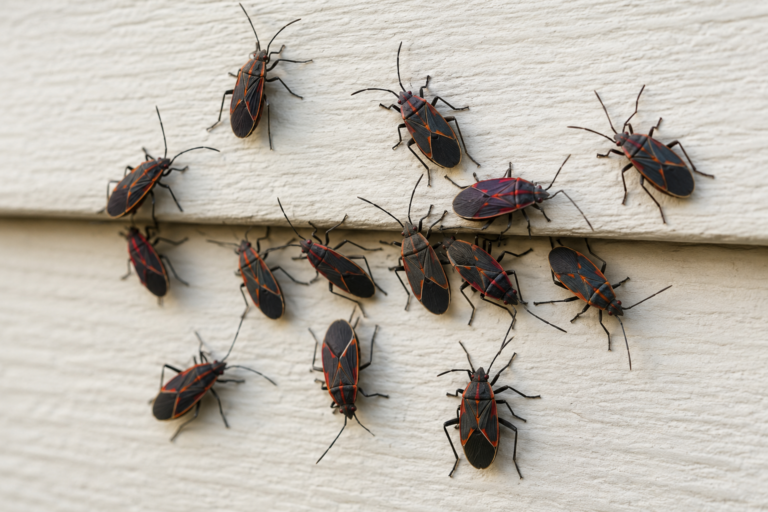
- Groups of brown shield-shaped bugs on sunny siding, window frames, and doors in fall
- Bugs buzzing around lights or resting on curtains and lampshades in winter
- A sharp, cilantro-like odor when a bug is disturbed or swept up
- Dead stink bugs collecting in window sills, light fixtures, or the attic
- Scarred, pitted, or dimpled spots on tomatoes, peppers, apples, and peaches in the garden
Prevention Tips
- Seal gaps around windows, doors, siding, and trim with good quality caulk before September.
- Repair or replace damaged window and door screens, and add screens to attic and soffit vents.
- Install door sweeps and weatherstripping on exterior doors, including garage and basement doors.
- Seal around pipes, wires, cable lines, and dryer vents where they enter the house.
- Vacuum up bugs that get inside, then empty the bag outside, instead of crushing them.
- Turn off unneeded outdoor lights at night in late summer and fall, since lights draw them in.
Professional Brown Marmorated Stink Bug Control
SPRK’s approach to stink bugs starts with an inspection of the outside of the house to find where they are gathering and getting in, like gaps at windows, siding, soffits, vents, and utility lines. We confirm the species, then apply a targeted perimeter treatment to the exterior surfaces where they land in late summer and early fall, before they move inside. We can seal common entry gaps and point out repairs worth making. Our general pest control service times these treatments to the fall migration, with follow-up as needed for homes that see heavy pressure each year.
Brown Marmorated Stink Bug FAQs
Stink bugs gather on warm walls in fall looking for a place to spend the winter. When a few find a gap and get inside, they release a scent that draws more of them to the same spot. They settle into attics and walls and come out on warm days. The ones you see indoors usually arrived months earlier, not that day.
No. Brown marmorated stink bugs do not bite or sting people or pets, and they do not damage wood, fabric, or wiring. They do not breed inside the house. The problems are the smell, stains if they are crushed, and the number that can build up in a home. Outdoors they do damage fruits and vegetables.
Vacuum them up or knock them into a container of soapy water, which avoids crushing them and releasing the smell. Use a vacuum you can empty right away, or a bag you can toss, since the odor can linger. Long term, sealing gaps outside before fall and treating the exterior during migration is what cuts down on numbers.
In Northern Virginia, adults start gathering on sunny walls in September and October as they look for winter shelter. They stay hidden through the cold months but wander out on warm winter days and again in March and April as they try to leave the house. Summer is spent outside feeding on plants and laying eggs.