American Cockroach at a Glance
Periplaneta americana
Also called: waterbug, palmetto bug, sewer roach, big red roach
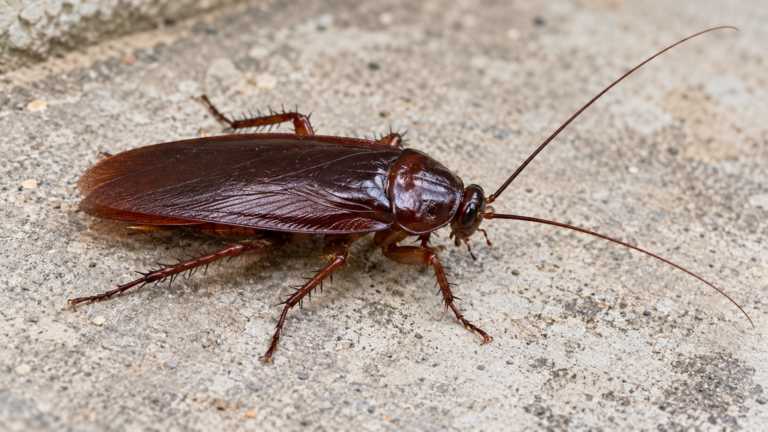
The largest house roach, about 1.5 to 2 inches, reddish brown with a pale yellow band ringing the shield behind its head.
- SizeAbout 1 1/2 to 2 inches long
- ColorReddish brown with a pale yellow edge on the shield
- BodySix spiny legs, very long antennae, full wings that let it glide
- FoundBasements, floor drains, boiler rooms, crawl spaces, sewers
- SeasonIndoors all year, most active outside in warm months
- DietDecaying food, garbage, paper, glue, dead insects
The American cockroach is the biggest roach most people in Northern Virginia will ever see. When someone calls about a roach the size of a matchbox in the basement or coming up a floor drain, this is a common answer.
They prefer commercial buildings, sewers, and steam pipes over single-family homes, so a few in a house usually means they found a way in from a drain or a damp lower level. Size and color tell them apart quickly from the smaller roaches that live in kitchens.
How to Identify an American Cockroach
- Adults are large, about 1 1/2 to 2 inches long without the antennae.
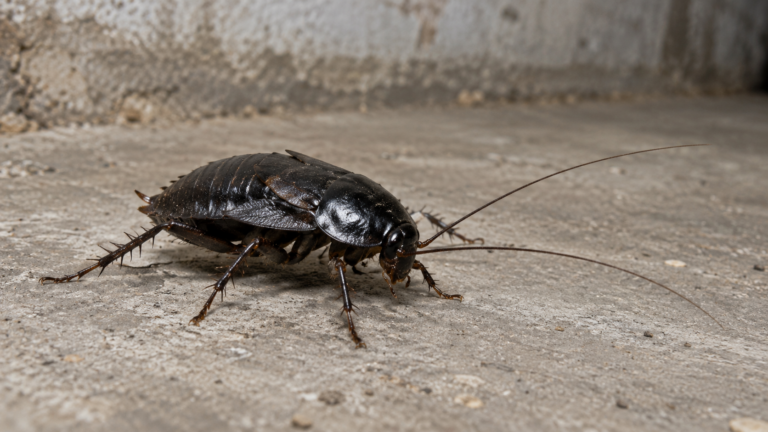
- The body is a shiny reddish brown, lighter than the dark oriental roach.
- The shield behind the head has a pale yellow to tan band around its edge with darker brown blotches in the center.
- Both males and females have full wings that reach the tip of the abdomen or a little past it.
- They can glide from high places and sometimes fly short distances in hot weather.
- Antennae are very long, often as long as the body.
- Young nymphs are grayish brown and wingless, turning more reddish as they grow.
Commonly Confused With
Where You Find Them in Northern Virginia
In Northern Virginia, American cockroaches favor warm, moist, dark places: sewer lines, storm drains, boiler rooms, steam tunnels, and the basements of commercial buildings and older homes. Inside a house they turn up near floor drains, sump pits, laundry areas, and water heaters. In summer they can also live outdoors in mulch, tree holes, and around damp foundations, then move inside when the weather turns or when heavy rain floods their outdoor shelters.
Life Cycle and Behavior
Females drop or glue their dark egg cases in protected spots near food. Each case holds about 14 to 16 eggs. Nymphs take many months to grow into adults, often close to a year depending on temperature, and adults can live for a year or more. That slow cycle means American roach numbers build more slowly than German roaches, but adults are long lived and sturdy.
Health and Property Risks
Because they travel through sewers and garbage, American cockroaches can carry bacteria onto food and surfaces. Their droppings and shed skins can trigger allergies and asthma in some people. They also chew on paper, book bindings, and stored cardboard. They are not aggressive, though their size and speed alarm many people. Talk with a doctor if you have health concerns tied to roach exposure.
Signs of Activity
- Large reddish brown roaches near floor drains, sump pits, or water heaters
- Blunt-ended, ridged droppings about the size of mouse droppings in basement corners
- Dark egg cases about 1/3 inch long glued near baseboards or in storage boxes
- Chewed edges on stored paper and cardboard
- A musty odor in damp lower levels
- Roaches appearing after heavy rain or after plumbing work
Prevention Tips
- Keep floor drain covers in place and run water in seldom-used drains to keep the trap filled.
- Lower basement humidity with a dehumidifier and fix plumbing leaks.
- Seal gaps where pipes and utility lines enter the foundation.
- Store items in plastic bins instead of cardboard boxes in basements and crawl spaces.
- Pull mulch a few inches back from the foundation and keep gutters clear.
- Add weatherstripping and door sweeps to basement and garage doors.
Professional American Cockroach Control
SPRK inspects drains, basement utility areas, crawl spaces, and the outside foundation to confirm the species and figure out whether the roaches are coming from a sewer line, a damp crawl space, or outdoor shelter. Treatment is targeted to where they travel: baits and dusts in voids and drain areas, and a perimeter treatment outside when they are living in mulch or around the foundation. We point out entry gaps and moisture problems to seal or fix, then check back to make sure activity has dropped. Learn more about our cockroach control service.
American Cockroach FAQs
Palmetto bug is a nickname, mostly used in the Southeast, for several large outdoor roaches. The American cockroach is the one people most often mean, though smokybrown roaches get the name too. In Northern Virginia, a large reddish brown roach with a pale yellow band behind the head is almost always an American cockroach.
Large roaches in a basement usually come up through floor drains or in through gaps in a damp foundation. They want moisture and darkness more than kitchen food. Check that drain traps hold water, run a dehumidifier, and seal pipe openings. If you keep finding them, an inspection can trace where they are entering.
They have full wings and can glide down from high spots. In hot weather they sometimes take short flights, which surprises people. Most of the time, though, they run. Their speed, more than flight, is why they are hard to catch.
Not necessarily. American roaches come from sewers, drains, and outdoor shelter, and they can show up in very clean homes, especially after heavy rain or plumbing changes. Clutter and moisture make it easier for them to stay, so cutting humidity and storage boxes in the basement helps.