Asian Tiger Mosquito at a Glance
Aedes albopictus
Also called: tiger mosquito, forest day mosquito, black and white mosquito, striped mosquito, daytime mosquito
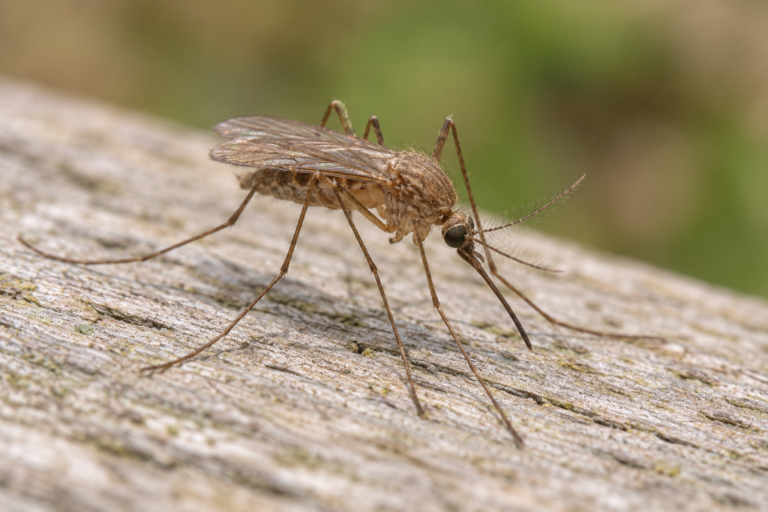
A small black mosquito with bright white leg bands and one white stripe down its back that bites during the day.
- SizeAbout 1/4 inch long, often smaller
- ColorGlossy black with bright white bands and scales
- BodySix banded legs, two narrow wings, one white stripe down the center of the back
- FoundShaded yards, patios, decks, and near any container that holds water
- SeasonMay through the first hard frost in Northern Virginia, peaking July to September
- DietFemales take blood from people and pets; both sexes feed on plant nectar
The Asian tiger mosquito is the black and white mosquito that bites your ankles while you sit on the deck in the middle of the afternoon. It arrived in the United States in the 1980s in shipments of used tires and is now one of the most common backyard mosquitoes in Virginia.
Unlike many mosquitoes that wait for dusk, this one feeds all day long, with spikes in the morning and late afternoon. It breeds in tiny amounts of standing water, so most of the mosquitoes biting you were likely raised within a few houses of where you are standing.
How to Identify an Asian Tiger Mosquito
- The body is shiny black, almost velvet in look, with crisp white markings instead of the dull brown of most mosquitoes.
- A single bright white stripe runs down the middle of the thorax, the section behind the head, which is the fastest way to confirm the species.
- Each leg has white bands at the joints, so the legs look striped when the mosquito lands.
- It is small, about 1/4 inch or less, and many people describe it as a mosquito that is hard to see until it is already biting.
- It flies low and quick, tends to bite ankles, calves, and the backs of legs, and keeps coming back after you swat at it.
- It bites during daylight hours in shade, which separates it from the brown house mosquitoes that bite mostly at night.
Commonly Confused With
Where You Find Them in Northern Virginia
Asian tiger mosquitoes live close to people. In Northern Virginia they spend the day resting in shrubs, ground cover, ivy, and the shady side of a house, then fly out to bite when someone walks by. Breeding happens in small containers: flowerpot saucers, buckets, clogged gutters, tarps, kids' toys, birdbaths, tires, corrugated downspout extensions, and tree holes. They rarely travel more than a few hundred feet from where they hatched, so a backyard full of mosquitoes usually means there are breeding spots on your property or a neighbor's. Activity starts in late spring, builds through the hot summer months, and ends after the first hard frost in fall.
Life Cycle and Behavior
Females lay eggs on the inside wall of a container just above the waterline. The eggs can survive dry for months, and they are the stage that makes it through a Virginia winter. When rain or a garden hose raises the water level, the eggs hatch into larvae, often called wigglers, which feed on bits of debris in the water. In warm summer weather the trip from egg to biting adult can take about a week to ten days. Each female can lay several batches of eggs over her life, which is why numbers climb so quickly from June into September.
Health and Property Risks
Most Asian tiger mosquito bites cause an itchy, raised welt that fades in a few days. Some people, especially children, react with larger swelling. Worldwide, this species can spread viruses such as dengue, chikungunya, and Zika, though local spread of those viruses in Virginia is rare and most cases here are tied to travel. It can also pick up West Nile virus. Dogs can get heartworm from mosquito bites, so talk with your vet about prevention. If you develop a fever, rash, joint pain, or other symptoms after mosquito bites, contact a doctor.
Signs of Activity
- Bites during the day while gardening, grilling, or sitting in the shade
- Small black and white mosquitoes landing on ankles and lower legs
- Wigglers swimming in buckets, saucers, birdbaths, or tarps
- Mosquitoes rising out of ivy, shrubs, or tall grass when you walk past
- Clogged gutters or downspout extensions that stay wet for days after rain
Prevention Tips
- Walk your yard once a week after rain and dump any water sitting in buckets, saucers, toys, wheelbarrows, and tarps.
- Scrub the inside of containers when you empty them, since the eggs stick to the walls above the waterline.
- Change birdbath and pet water bowls every few days.
- Clean gutters and make sure downspout extensions drain fully and do not hold water.
- Drill drain holes in tire swings, recycling bins, and planters that collect rain.
- Trim back dense shrubs and ivy near patios and doors to cut down on shady resting spots.
Professional Asian Tiger Mosquito Control
SPRK starts with a walk of your property to confirm which mosquitoes are biting and to find where they are breeding and resting. With tiger mosquitoes that usually means hunting down small water sources that are easy to miss, like a clogged gutter corner, a tarp fold, or a hidden drain. We point out what you can dump or fix, treat breeding sites that cannot be removed, and apply a targeted barrier treatment to the shrubs, ground cover, and shaded areas where adults rest during the day. Because new mosquitoes hatch all season, our mosquito control service runs on a recurring schedule through the warm months, with each visit checking for new breeding spots before we treat.
Asian Tiger Mosquito FAQs
This species evolved in forests where it fed on animals during daylight hours, and it kept that habit after spreading around the world. It bites most in shade during the morning and late afternoon, but it will bite any time someone sits still near its resting spots. That is why people notice bites while gardening or sitting on a patio at lunchtime.
They are able to carry viruses like dengue, chikungunya, Zika, and West Nile. In Virginia, local spread of dengue, chikungunya, and Zika has been very rare, and most cases are linked to travel. For most homeowners the main problem is the constant biting. If you feel sick with fever, rash, or joint pain after bites, contact a doctor.
Not far. Most stay within a few hundred feet of the container where they hatched. That short range is good news, because it means the mosquitoes in your yard are usually coming from your property or the yards right next to it. Finding and removing standing water nearby makes a real difference for this species.
Adult Asian tiger mosquitoes die off after the first hard frost. Their eggs do not. The eggs stay stuck to the inside of buckets, gutters, and tires all winter and hatch when spring rains fill those containers. Cleaning out and flipping containers in fall and early spring removes many of the eggs before the season starts.