American Dog Tick at a Glance
Dermacentor variabilis
Also called: dog tick, wood tick, brown dog tick, eastern wood tick
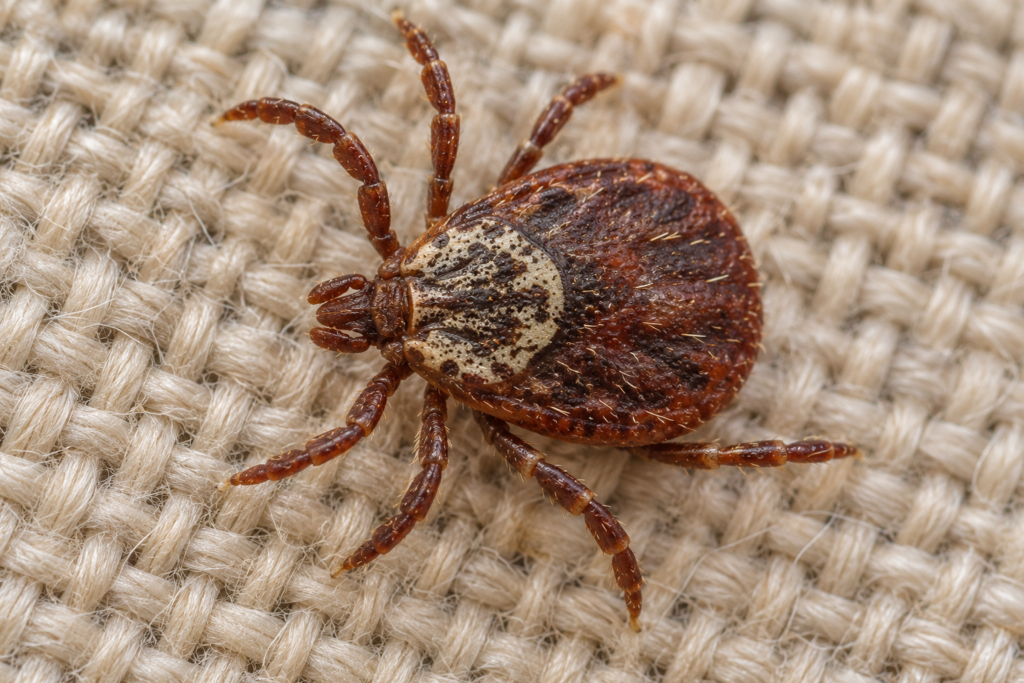
A larger brown tick with gray to white mottled markings on its shield, often found on dogs and people in grassy areas.
- SizeAdult about 3/16 inch unfed; engorged females can reach 1/2 inch
- ColorReddish brown with gray, silver, or off-white mottled markings
- BodyFlat oval shape, eight legs as adults, short mouthparts
- FoundTall grass, fields, roadsides, trail edges, and overgrown lawn borders
- SeasonAdults April through August, peaking in May and June in Northern Virginia
- DietAdults feed on dogs, people, raccoons, and other mid-size mammals; young stages feed on rodents
The American dog tick is the larger, mottled brown tick many Virginia families find on the dog after a walk, or crawling up a pant leg after mowing. It is one of the easier ticks to see thanks to its size and the gray to white pattern on its back.
Despite the name, dog ticks bite people too. They prefer open, grassy areas over deep woods, so overgrown fields, roadside ditches, and the tall grass at the back of a yard are prime spots. They are most active in late spring and early summer.
How to Identify an American Dog Tick
- Adults are about 3/16 inch long before feeding, which makes them noticeably bigger than blacklegged ticks.
- The body is reddish brown with gray, silver, or off-white mottled markings on the shield behind the head.
- Females have the light markings only on the shield near the head, while males have mottled markings across the whole back.
- The mouthparts are short and stubby compared with the long mouthparts of blacklegged and lone star ticks.
- An engorged female swells into a gray, bean-shaped body up to about 1/2 inch long.
- Adults usually wait at the tips of tall grass along trails and field edges, at about knee height.
Commonly Confused With
Where You Find Them in Northern Virginia
American dog ticks live in grassy, brushy areas with little tree cover. In Northern Virginia they turn up in old fields, meadows, power line cuts, roadside ditches, trail edges, and long grass along fences or the back of a yard. Raccoons, opossums, and other mid-size mammals carry them, and young ticks feed on mice and voles. Adults appear in April, peak in May and June, and taper off by late summer. Unlike the brown dog tick, this species does not set up inside homes, though a tick may ride indoors on a pet or clothing.
Life Cycle and Behavior
The American dog tick has four stages: egg, larva, nymph, and adult. Larvae and nymphs feed mostly on mice, voles, and other small rodents, so people rarely see those stages. Adults climb tall grass and wait for a larger host to pass. After a full blood meal, a female drops off and lays a mass of several thousand eggs on the ground. The full life cycle can take from one to two years, and unfed adults are able to survive for long stretches while waiting for a host.
Health and Property Risks
American dog ticks can spread Rocky Mountain spotted fever, now grouped with related illnesses as spotted fever rickettsiosis, and Virginia reports cases every year. Symptoms can include fever, headache, and a rash that may appear a few days later. Dog ticks can also spread tularemia and, in rare cases, cause tick paralysis in pets or people, which goes away once the tick is removed. They are not considered a carrier of Lyme disease. If you or a family member get a fever or rash after a tick bite, contact a doctor, and ask your vet about tick prevention for pets.
Signs of Activity
- Large brown ticks with light markings found on dogs after walks or time in tall grass
- Ticks crawling up pants or shoes after mowing or trimming overgrown areas
- Engorged gray ticks attached around a dog's ears, neck, or between the toes
- Raccoons, opossums, or mice active around the yard or under a deck
- Unmowed grass and weeds at the back of the property or along fences
Prevention Tips
- Keep grass mowed and cut back tall weeds along fences, sheds, and the back edge of the yard.
- Trim tall grass along walkways and pet routes so ticks have fewer places to wait at knee height.
- Secure trash cans and remove pet food from outside to discourage raccoons and opossums.
- Close off openings under decks and sheds where wildlife might nest.
- Check dogs every day in spring and summer, focusing on the ears, neck, armpits, and between the toes.
- Ask your vet about a tick preventive for your pets, especially if they spend time in fields or tall grass.
Professional American Dog Tick Control
SPRK inspects the yard to find the tall grass, field edges, fence lines, and wildlife paths where dog ticks wait for a host. We confirm the tick species, look for signs of the raccoons, opossums, and rodents that carry them in, and then target treatment to those zones. Our lawn pest spraying program is scheduled around the spring and early summer peak, with follow-up visits through the season. We also note habitat fixes, like cutting back overgrowth or closing off a crawl space under the deck, so fewer ticks get brought in.
American Dog Tick FAQs
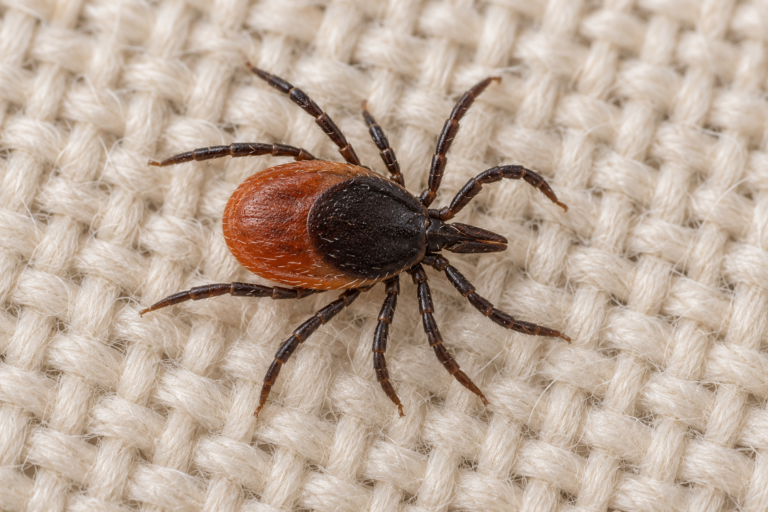
The American dog tick is larger and reddish brown with gray or white mottled markings on its shield. A deer tick, or blacklegged tick, is smaller with dark legs, no light markings, and an orange-red body on the female. Dog ticks prefer grassy fields, while deer ticks prefer leaf litter and wooded edges. Deer ticks spread Lyme disease, and dog ticks do not.
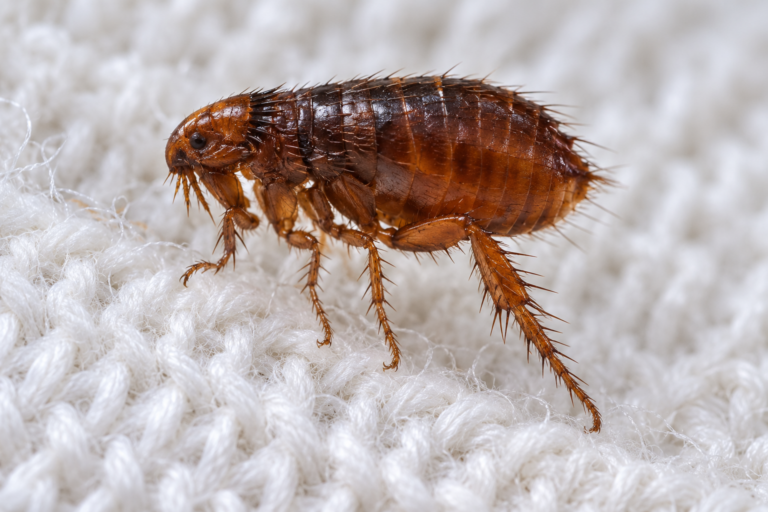
Not for long. American dog ticks need outdoor conditions to complete their life cycle, so they do not set up indoors. A tick that rides in on a pet may crawl around for a short time. The brown dog tick is a different species that can breed indoors, and it has plain brown coloring without the mottled pattern.
Yes, they are one of the main carriers of Rocky Mountain spotted fever in the eastern United States, and Virginia reports cases of spotted fever rickettsiosis each year. Not every tick carries the bacteria. If you develop fever, headache, or a rash within two weeks of a tick bite, contact a doctor and mention the bite.
Use fine-tipped tweezers or a tick removal tool to grip the tick as close to the skin as possible and pull straight up with steady pressure. Avoid twisting or squeezing the body. Clean the area afterward and wash your hands. Watch the spot for a few days and contact your vet if your dog seems sick or the area looks infected.