Clover Mite at a Glance
Bryobia praetiosa
Also called: red mites, tiny red bugs, red spider mites on windows, clover bugs
A pinhead-sized red mite with extra-long front legs that crowds sunny windows and leaves a red smear when crushed.
- SizeAbout 0.75 mm, smaller than a pinhead
- ColorBright red to reddish brown, sometimes greenish after feeding
- BodyEight legs, front pair much longer than the rest, oval body
- FoundSunny window sills, siding, and foundation walls
- SeasonSpring and fall, most often March to May
- DietPlant juices from grass, clover, and weeds
Clover mites are the tiny red specks that show up by the hundreds on a sunny window sill in early spring. They are true mites, not insects, and they feed on lawn grass and clover right outside your foundation.
They do not bite, carry disease, or eat anything inside your home. The trouble is the sheer number of them and the red stain they leave on curtains, carpet, and paint when someone wipes them up.
How to Identify a Clover Mite
- The body is about the size of a pinhead, so most people first see them as moving red dots.
- Color runs from bright red to rusty brown, and young mites look brighter red than adults.
- The front pair of legs is about twice as long as the others and is often mistaken for antennae.
- They have eight legs, which separates them from tiny insects with six.
- They gather in large numbers on the warm, sunny side of a house, usually the south or west wall.
- Crushing one leaves a red streak, which is pigment from the mite and not blood.
Commonly Confused With
Where You Find Them in Northern Virginia
In Northern Virginia, clover mites build up in thick, well-fertilized lawns that run right up to the foundation. When spring sun warms the siding, they climb the wall and slip through gaps around windows, doors, and sill plates. Indoors they cluster on sills, window frames, and walls on the sunny side of the house, and they die within a few days because there is nothing for them to eat.
Life Cycle and Behavior
Every clover mite is female, and they reproduce without mating. Each one lays about 70 red eggs in cracks of bark, siding, or foundation concrete. The mites are most active in cool weather, so they peak from March into May and again in fall. In the heat of summer they lay eggs that wait until temperatures drop, and in winter both eggs and some adults stay tucked into protected cracks. Northern Virginia sees a few generations each year.
Health and Property Risks
Clover mites pose no health risk. They do not bite people or pets, they do not spread disease, and they do not damage wood or food. The real cost is cosmetic. Crushed mites leave red stains on light fabric, drapes, carpet, and painted trim that can be hard to remove. Large numbers on a sunny wall can also be a nuisance for weeks in spring.
Signs of Activity
- Swarms of tiny red dots on window sills and glass on the sunny side of the home
- Red streaks on curtains, sills, or walls after wiping mites away
- Mites crawling on exterior siding or foundation walls on warm spring days
- Clusters along door frames and the edges of window screens
- Activity that fades in the summer heat and returns in fall
Prevention Tips
- Keep a bare strip of 18 to 24 inches between the lawn and the foundation, filled with gravel or stone.
- Avoid heavy fertilizing of grass right next to the house, since lush growth feeds large mite populations.
- Caulk gaps around window frames, door frames, and where siding meets the foundation.
- Repair torn window screens and add weatherstripping to doors on the sunny side of the home.
- Vacuum indoor mites instead of wiping them to avoid red stains.
- Trim back grass, clover, and ground cover that touches the siding.
Professional Clover Mite Control
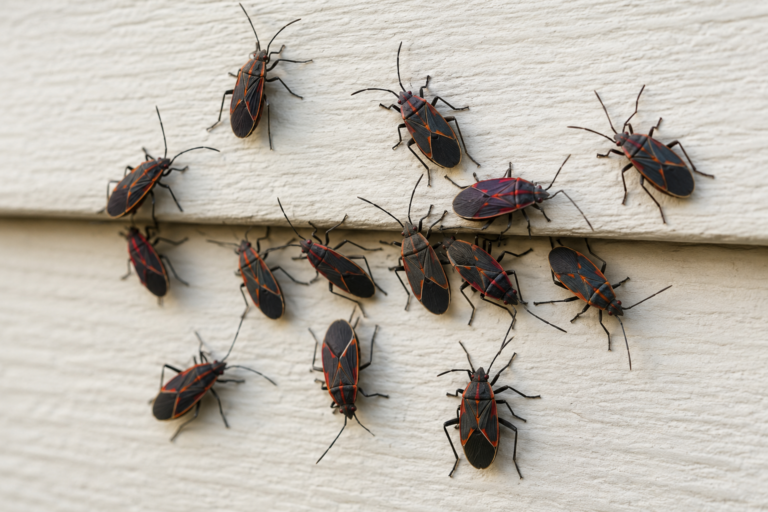
SPRK starts with an inspection to confirm you are dealing with clover mites and not boxelder bug nymphs or another red pest. We look at where the lawn meets the foundation, check the sunny walls, and find the gaps the mites use to get inside. Treatment is a targeted application to the foundation, the grass band next to the house, and the exterior walls where mites gather, timed for their spring and fall activity. We point out the openings worth sealing and talk through the bare-strip change that cuts future numbers. Our general pest control service includes follow-up visits so activity can be checked when the next cool season arrives.
Clover Mite FAQs
No. Clover mites do not bite people or pets, and they do not feed on blood. They feed on plant juices from grass, clover, and weeds outside your home. The red color some people see on their skin after brushing against them is pigment from a crushed mite, not a bite mark. If you have itchy welts, the cause is something else, and a doctor can help sort it out.
The red color comes from natural pigments in the mite's body. When one is crushed, that pigment smears onto whatever surface it is on, such as a window sill, curtain, or light carpet. It is not blood. To avoid stains, vacuum the mites up with a crevice tool instead of wiping them with a paper towel or cloth. A wet stain on fabric should be blotted, not rubbed.
Indoors, clover mites usually die within a few days because they cannot find food. The problem is that new ones keep coming in from the lawn and walls as long as the weather stays cool and sunny. In Northern Virginia that often means a few weeks in spring and a shorter stretch in fall. Sealing gaps and treating the exterior is what shortens the season.
Vacuum the mites you see indoors, then go after the source outside. Most of them live in the grass and on the sunny foundation wall, so indoor sprays do little. Clearing a bare gravel strip along the foundation, sealing gaps around windows, and an exterior treatment of the foundation and nearby grass will cut the numbers much faster than cleaning alone.