Paper Wasp at a Glance
Polistes species
Also called: umbrella wasp, European paper wasp, northern paper wasp, red wasp, porch wasp
Slender wasp with long dangling legs that builds an open, umbrella-shaped comb under eaves and railings.
- SizeAbout 3/4 to 1 inch long
- ColorBrown or reddish-brown with yellow marks, or yellow and black (European paper wasp)
- BodyThin waist, six long legs that hang down in flight, two pairs of smoky wings, orange-tipped antennae on many species
- FoundUnder eaves, porch ceilings, deck rails, shutters, grill covers, mailboxes, and playsets
- SeasonQueens start nests in April and May; colonies peak in August and September
- DietCaterpillars and other soft insects for the young; nectar and sweets for adults
Paper wasps are the wasps most homeowners in Northern Virginia meet first, because they build right where people live: on the porch ceiling, under the deck rail, inside the grill cover. The nest is a single, open comb of gray paper cells that looks like an upside-down umbrella hanging from a short stalk.
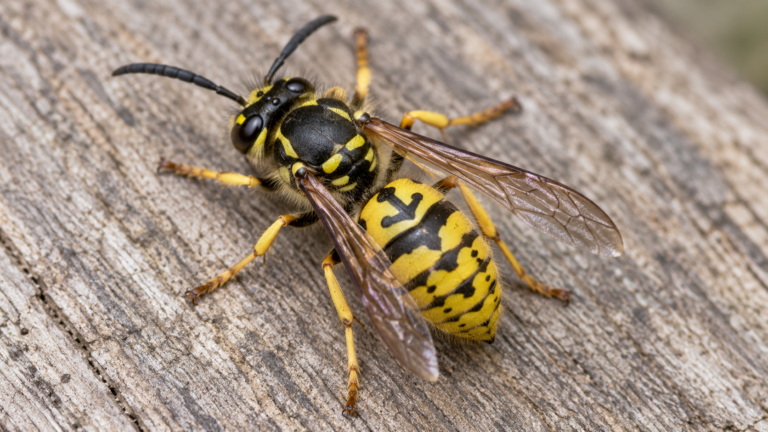
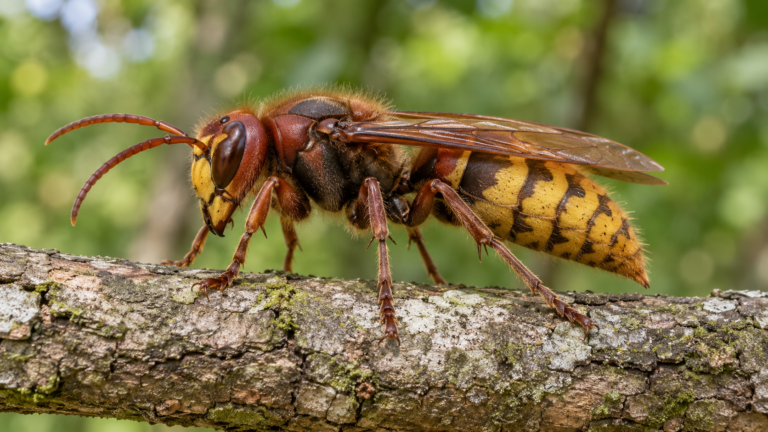
They are less aggressive than yellowjackets and hornets, and a small nest in a quiet corner may never cause trouble. Problems start when the nest sits next to a door, a railing people grab, or a spot where kids play. The European paper wasp is now common in Virginia and is yellow and black, so many people mistake it for a yellowjacket.
How to Identify a Paper Wasp
- The body is long and slender, about 3/4 to 1 inch, with a thin, clearly pinched waist.
- In flight the long back legs hang down below the body, which yellowjackets and hornets do not do.
- Native species are mostly brown or rusty red with thin yellow rings on the abdomen.
- The European paper wasp is bright yellow and black and has orange antennae, while yellowjackets have black antennae.
- The nest is one open comb with the cells facing down and no paper cover around it.
- Nests usually hold a few dozen wasps, and you can often see them resting on the comb.
- Wings fold lengthwise along the sides of the body when the wasp is at rest.
Commonly Confused With
Where You Find Them in Northern Virginia
Across Northern Virginia, paper wasps choose sheltered, dry spots with some overhead cover. Typical sites are soffits and eaves, the underside of decks and porch railings, window shutters, light fixtures, door frames, sheds, swing sets, and the inside of grill covers or unused equipment. In fall, mated queens look for protected places to spend the winter, and some slip into attics, wall voids, and window frames. Those queens may show up indoors on warm winter days, slow and sluggish.
Life Cycle and Behavior
A single queen that survived the winter starts a new nest in spring, often in April or May. She chews wood fibers into paper, builds the first few cells, and raises the first workers herself. Over the summer the colony grows to a few dozen wasps, rarely more than about 100. Males and new queens appear in late summer. After the first hard frosts the old queen, workers, and males die, and only the new mated queens survive the winter in sheltered spots. Old nests are not reused, but queens often build near the same site the next year.
Health and Property Risks
Paper wasps sting to defend the nest, and unlike honey bees they can sting more than once. Most stings happen when someone bumps a railing, opens a shutter, or reaches into a grill cover without seeing the nest. A sting is painful and causes local swelling. People who are allergic to wasp venom can have serious reactions, so anyone with trouble breathing, swelling of the face or throat, or dizziness after a sting needs emergency care right away. Contact a doctor with any medical concerns. Paper wasps do not damage the home itself.
Signs of Activity
- Gray, papery, umbrella-shaped combs hanging from a short stalk under eaves or railings
- Wasps with long dangling legs flying slowly around the porch or deck
- Small starter nests the size of a quarter appearing in spring
- Wasps landing on wooden fences or decks and scraping wood to make paper
- Slow-moving wasps indoors in late fall or winter, coming out of attics or window frames
Prevention Tips
- Check eaves, deck rails, shutters, and play equipment every couple of weeks from April through June, when nests are small.
- Knock down empty starter nests early in spring, before workers hatch, using a long pole and standing well back.
- Keep grill covers, outdoor furniture covers, and stored equipment closed, and lift them carefully before use.
- Seal gaps around soffits, attic vents, and window frames in late summer to keep queens out for the winter.
- Replace damaged window and vent screens.
- Keep hummingbird feeders and sugary drinks away from doors and seating areas.
Professional Paper Wasp Control
SPRK starts with an inspection of the eaves, decks, railings, shutters, and outbuildings, because there is often more than one paper wasp nest on a property. We confirm the species so the nest is not confused with a yellowjacket or hornet colony, which call for a different approach. The technician treats each active nest with a product labeled for stinging insects, waits for the colony to die, and then removes the comb so it does not attract attention later. We also point out entry gaps where queens may be getting into the attic for the winter and talk through sealing options. Our Wasp and Hornet Control service includes follow-up if new nests show up.
Paper Wasp FAQs
Paper wasps are usually calm when you are a few feet from the nest. They sting when someone touches, bumps, or shakes the nest, or swats at a wasp near it. That is why nests on railings, door frames, and grill covers cause the most stings. A nest high on a second-story eave that nobody goes near is much less of a concern than one by the back door.
If the nest is small, far from doors and walkways, and nobody in the home is allergic, some homeowners choose to leave it, since paper wasps eat caterpillars. If the nest is near an entrance, a play area, or anyone with a sting allergy, it should come down. The colony dies off in late fall either way, and the old nest is not reused.
A paper wasp nest is a single, flat or slightly rounded comb of gray paper cells, open on the bottom so you can see the six-sided cells. It hangs from a thin stalk, which gives it the umbrella shape. There is no outer paper shell. Yellowjacket and hornet nests are enclosed, which is the easiest way to tell them apart.
In fall, mated paper wasp queens look for a protected place to spend the winter, and attics, wall voids, and window frames work well. On warm days, or when the heat comes on, some wander into living spaces. They are slow and rarely sting, but they are a sign of gaps around the roofline or windows that should be sealed.