Eastern Yellowjacket at a Glance
Vespula maculifrons
Also called: yellow jacket, ground bee, ground hornet, yellow jacket wasp, meat bee
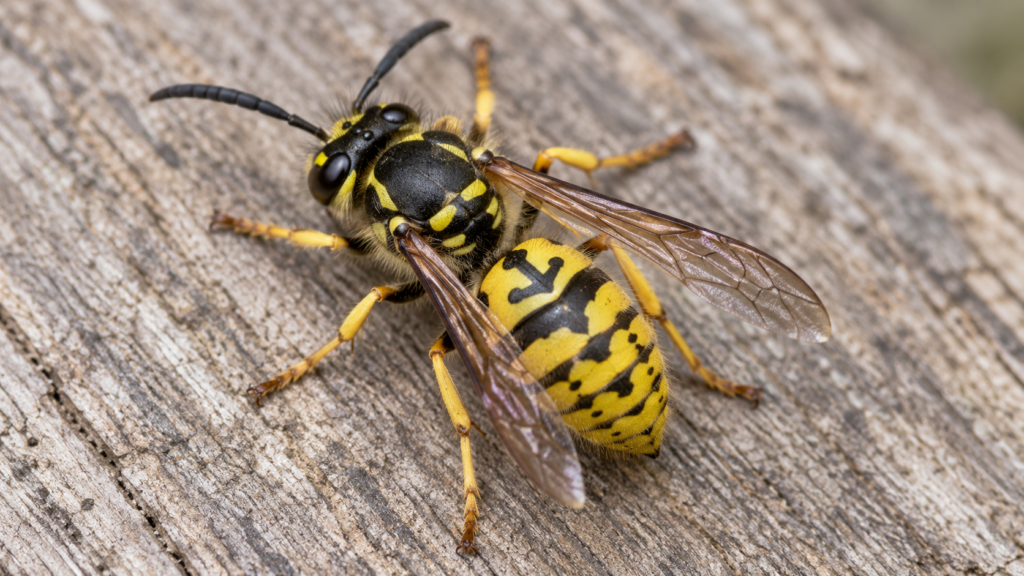
Short, stocky black and yellow wasp that nests underground and has a black anchor mark on the first abdomen segment.
- SizeWorkers about 1/2 inch; queens up to about 3/4 inch
- ColorBright yellow and black bands
- BodyStout, compact body with a short waist, black antennae, legs tucked up in flight, wings folded lengthwise
- FoundUnderground nests in lawns, flower beds, banks, under shrubs and stumps; sometimes in wall voids
- SeasonQueens start nests in spring; colonies are largest and most defensive from August into October
- DietLive insects for the young; sweets, fruit, soda, and meat scraps for adults
The eastern yellowjacket is the black and yellow wasp that comes boiling out of the ground when someone mows over its nest. It is the most common yellowjacket in Northern Virginia and causes a large share of the stings people get every late summer.
Many people call them ground bees, but they are wasps, and they live in large paper nests built inside old rodent holes and other cavities in the soil. The entrance is usually a single hole about the size of a nickel, with a steady stream of wasps flying straight in and out.
How to Identify an Eastern Yellowjacket
- Workers are about 1/2 inch long, with a compact, stocky body and a short waist.
- The abdomen has bright yellow and black bands with sharp edges and almost no hair.
- The first segment of the abdomen, right behind the waist, has a wide black mark shaped like an anchor or a trident.
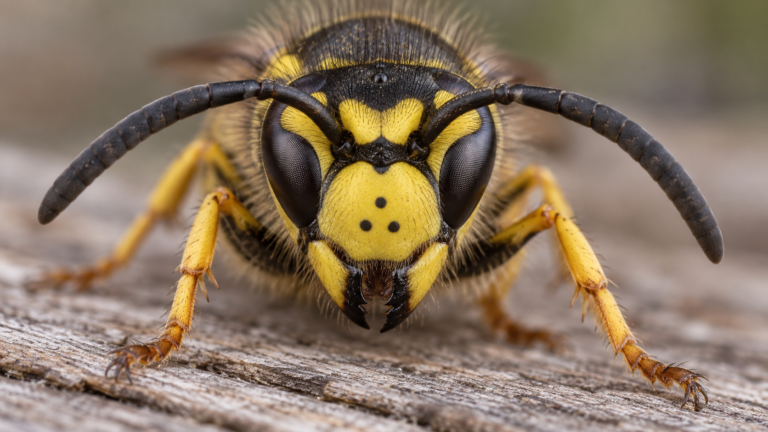
- The face is mostly yellow with a black mark down the center, not the three separate dots of the German yellowjacket.
- The antennae are black, and the legs are tucked up against the body in flight.
- Wasps fly fast and straight in and out of a single hole in the ground.
Commonly Confused With
Where You Find Them in Northern Virginia
In Northern Virginia, eastern yellowjackets nest in lawns, mulched beds, wooded edges, creek banks, rock walls, and under shrubs, stumps, and garden timbers. They often take over abandoned rodent burrows. Less often they build in wall voids, crawl spaces, or under decks. Foraging workers spread out across yards, picnics, outdoor dining areas, trash cans, recycling bins, and fallen fruit, especially as natural food runs short in late summer.
Life Cycle and Behavior
A single mated queen comes out of winter shelter in spring and starts a small paper nest underground. She raises the first workers, and from then on she only lays eggs while the workers dig, build, forage, and defend. The nest grows all summer, adding layers of comb inside a paper shell, and by late summer it can hold thousands of wasps. New queens and males are produced in late summer and fall. After hard frosts the colony dies, and only the new mated queens survive the winter. The old nest is not reused.
Health and Property Risks
Eastern yellowjackets are defensive around the nest and can sting many times. Vibration from mowers, string trimmers, and footsteps can set off a mass attack, and multiple stings are common. Late in the season they also hang around food and drinks, which leads to stings on the mouth and hands when a wasp crawls into a soda can. People who are allergic to venom can have life-threatening reactions. Anyone with trouble breathing, swelling of the face or throat, or many stings should get emergency care, and anyone with medical concerns should contact a doctor. A nest inside a wall can sometimes chew through drywall into living space.
Signs of Activity
- A single hole in the lawn or bed with wasps flying straight in and out
- Bare soil or loose dirt around a hole, often growing larger by late summer
- Many black and yellow wasps around trash cans, recycling, and outdoor food
- Sudden stings while mowing, trimming, or weeding in one area
- Wasps going in and out of a gap in siding, a foundation crack, or a utility opening
Prevention Tips
- Walk the yard before mowing in late summer and watch for steady wasp traffic at a single spot.
- Keep lids tight on trash and recycling bins, and rinse sweet drinks out of cans and bottles.
- Cover food and drinks outdoors, and drink from cups with lids or straws.
- Pick up fallen fruit from trees and gardens.
- Fill old rodent holes and low spots in the lawn in early spring before queens choose nest sites.
- Seal foundation cracks and gaps around utility lines so colonies cannot move into walls.
Professional Eastern Yellowjacket Control
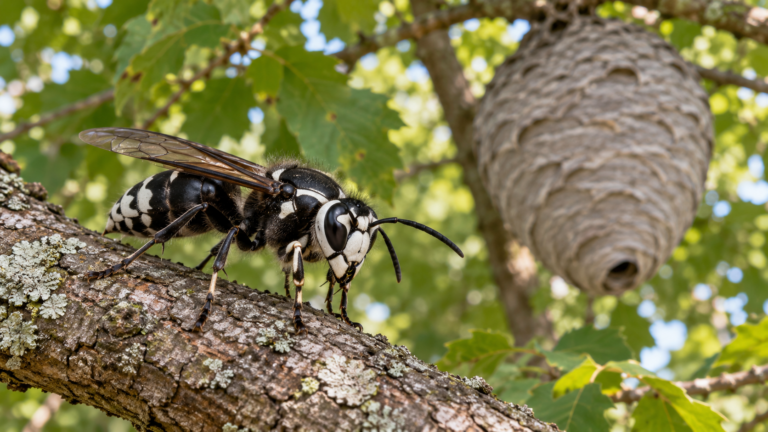
SPRK inspects the yard and the outside of the home to find every active entrance, then confirms the species, since an eastern yellowjacket ground nest needs a different plan than a hornet nest in a tree. The technician treats directly into the nest opening with a product labeled for yellowjackets, often in the evening when most workers are inside. Wall and structural nests get special care so the wasps are not pushed into the living space. After treatment we leave the entrance open for a few days so returning workers contact the product, then check that activity has stopped. This work is part of our Wasp and Hornet Control service.
Eastern Yellowjacket FAQs
No. Gasoline is a fire hazard, contaminates soil, and often fails to reach the whole nest, which can sit a foot or more underground and hold thousands of wasps. Many people get stung trying it. Standing over a ground nest at all is risky, because vibration sets off the defenders. A professional treatment placed directly into the nest is the safer route.
By late summer the colony is at its largest, and the workers are no longer raising as many young. They switch to hunting sugar, which is why they show up at picnics, trash cans, and drinks. Their nests are also big and easy to disturb with mowers. That mix of large colonies and food hunting makes August through October the worst time for stings.
Look at the face and the first abdomen segment. The German yellowjacket has three tiny black dots on its yellow face and small black dots in the yellow bands. The eastern yellowjacket has a black stripe or anchor shape on the face and a wide black anchor mark on the first abdomen segment. Nest location helps too, since eastern yellowjackets mostly nest underground.
The same nest will not. The colony dies after hard frosts, and the old nest is abandoned. New queens survive the winter elsewhere and start fresh nests in spring, sometimes in the same type of spot. A yard with old rodent holes, loose soil, and open trash can attract new colonies, so the prevention steps matter year to year.